
The 2026 Edge: Transforming E-Commerce with AI Generated Marketing Content
The 2026 Edge: Transforming E-Commerce with AI Generated Marketing Content
Welcome to the year 2026, a defining era where e-commerce and digital advertising have evolved beyond traditional boundaries. In a landscape where consumer attention spans are shorter than ever, the demand for visual perfection and contextual relevance has skyrocketed. The secret weapon for top-tier brands is no longer massive photo studio budgets; instead, the industry standard has shifted entirely toward AI generated marketing content.
This thought leadership piece explores how modern brands are scaling their visual output, personalizing the buyer journey, and achieving unprecedented conversion rates without getting bogged down by technical complexities. We will dive deep into actionable strategies, channel-specific adaptations, and the seamless workflows that define modern product marketing.

The Shift Away from Traditional Product Photography
For decades, bringing a product to market meant enduring a grueling, resource-intensive process. Brands had to hire professional photographers, scout locations, hire models, wait weeks for post-production editing, and ultimately settle for a handful of static images. If a campaign required a seasonal update—such as shifting from a summer beach setting to a cozy winter cabin—the entire expensive cycle had to be repeated.
By 2026, the paradigm has completely flipped. The agility required to succeed in global e-commerce demands instant asset generation. AI generated marketing content bridges this gap, allowing marketers to bypass the logistics of physical photo shoots entirely. The focus has shifted from managing production crews to managing creative strategy.
The Core of Modern Content Generation
Today's leading platforms have democratized high-end commercial photography. The workflow is astonishingly simple yet remarkably powerful: upload a single, basic product image, and select the corresponding product display template based on your specific marketing channel.
For example, HaiMeta Product Display created by HaiMeta perfectly illustrates this modern capability. Instead of overwhelming users with dense technical interfaces, nodes, or coding requirements, the platform focuses purely on the marketing outcome.
Let's break down the primary display styles that are driving conversions in 2026:
1. The Minimalist White Background
While lifestyle images drive emotional connection, pure product clarity remains the bedrock of online retail. The minimalist white background style is essential for core marketplace listings.
- The Channel Fit: E-commerce giants like Amazon, Walmart, and standard Shopify product pages.
- The Psychological Impact: It removes all distractions. The consumer's eye is drawn exclusively to the product's design, texture, and physical attributes.
- The Execution: When generating this style, the AI automatically extracts the product from its original background, refines the edges with pixel-perfect precision, and adds hyper-realistic natural shadows and reflections. This ensures the product does not look like a flat sticker, but rather a physical object resting on a pristine studio surface.
2. Immersive User Scenarios (Lifestyle Context)
Selling a product is ultimately about selling a feeling or a lifestyle. A coffee mug sitting on a white background is a commodity; that same coffee mug sitting on a rustic wooden table next to an open book with morning sunlight streaming through a nearby window is an experience.
- The Channel Fit: Instagram, Pinterest, TikTok, and top-of-funnel brand awareness campaigns.
- The Psychological Impact: Contextual imagery allows the consumer to visualize the product in their own life. It answers the subconscious question: "How does this fit into my world?"
- The Execution: By utilizing AI generated marketing content, brands can instantly place their uploaded product into hundreds of different environments. Whether you need a sleek, modern bathroom vanity for a skincare serum, a high-intensity gym setting for a fitness supplement, or a cozy living room for home decor, the environment is generated around the product seamlessly. Lighting, perspective, and color grading are automatically matched, creating a flawlessly realistic photograph.
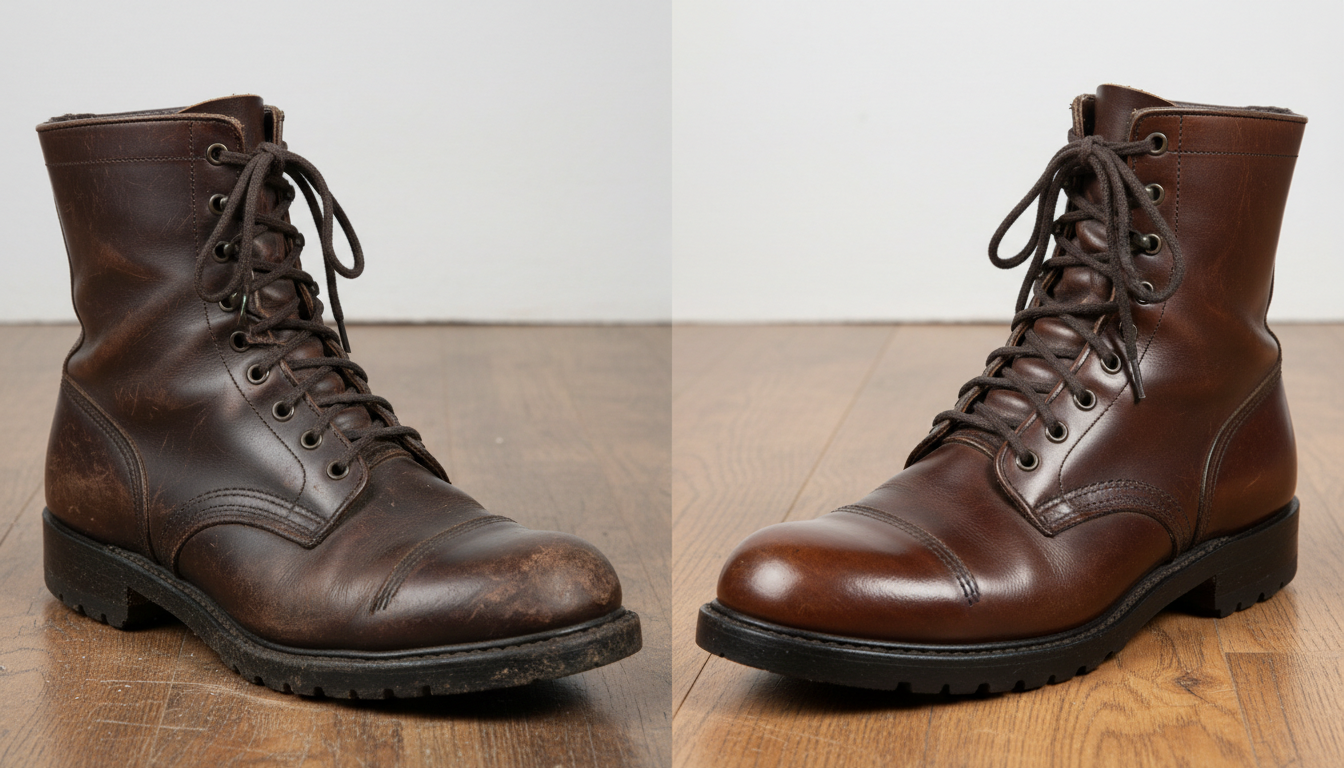
3. Before & After Efficacy Comparisons
Nothing drives direct response conversions quite like undeniable visual proof. The "Before & After" format has been a staple of advertising for a century, but historically, capturing authentic and visually compelling comparisons was difficult and often looked staged.
- The Channel Fit: Facebook Ads, performance marketing campaigns, and detailed product landing pages.
- The Psychological Impact: It creates an immediate narrative of transformation. The consumer instantly understands the pain point (the 'before') and the resolution (the 'after' facilitated by your product).
- The Execution: Modern AI tools excel at creating these side-by-side comparisons. Whether it is a pair of dirty sneakers transforming into pristine white shoes, a dull kitchen knife contrasted with a razor-sharp blade slicing effortlessly, or a faded piece of outdoor furniture restored to its original vibrancy, the AI generates hyper-realistic visual proof. This specific template bypasses vague promises and delivers concrete, visual guarantees to the consumer.
Strategic Channel Alignment in 2026
One of the most significant advantages of AI generated marketing content is the ability to maintain channel-specific relevance. In the past, brands would use the same hero image across their website, their social media, and their print catalogs. In 2026, this "one size fits all" approach is guaranteed to depress conversion rates.
Tailoring the Asset to the Audience
When a marketer uploads a single product photo, they are initiating a multi-channel asset creation process.
- For the Marketplace: They select the minimalist white background to comply with strict vendor guidelines and ensure the product is the sole focus.
- For Social Media: They select the user scenario template. If the target demographic is urban millennials, the AI generates an environment featuring modern apartment aesthetics. If the target is outdoor enthusiasts, the AI places the product on a rocky mountain ledge.
- For Paid Advertising: They select the Before & After efficacy template. This visual immediately stops the user from scrolling, presenting a problem and a solution in a fraction of a second.
This level of granular targeting was previously reserved for Fortune 500 companies. Now, it is accessible to any brand leveraging intelligent generation tools.
The True Value: Speed, Consistency, and ROI
Adopting AI generated marketing content is not just a creative upgrade; it is a fundamental financial advantage.
- Unmatched Speed to Market: Instead of waiting four weeks for a photo studio to return edited assets, marketing teams can conceptualize, generate, and launch a campaign in a single afternoon. If a sudden cultural trend emerges on social media, brands can generate product images that match that trend within minutes.
- Absolute Brand Consistency: Human photographers have different styles, lighting preferences, and editing techniques. This often leads to fragmented brand identities. AI generation ensures that lighting, shadow depth, and color palettes remain perfectly consistent across thousands of SKUs, elevating the overall perceived value of the brand.
- Infinite Scalability: Whether you are launching one product or a catalog of ten thousand items, the effort required to generate top-tier marketing content remains practically identical.

Conclusion: Embracing the Visual Future
The narrative of marketing in 2026 is clear: visual context is king, and speed is the vehicle that delivers it. Traditional barriers to high-quality commercial photography have been completely dismantled. We are no longer limited by physical locations, studio availability, or massive production budgets.
By simply uploading a product photo and letting intelligent platforms handle the environmental rendering, shadows, and contextual storytelling, brands can focus on what truly matters: connecting with their audience and driving sales. Whether you need the crisp professionalism of a minimal white background, the emotional pull of a lifestyle scenario, or the compelling proof of a before-and-after comparison, AI generated marketing content provides the exact asset you need, exactly when you need it.
The tools are here, the workflow is effortless, and the competitive advantage is undeniable. It is time to elevate your digital storefront and let your products speak through perfect, context-driven imagery.